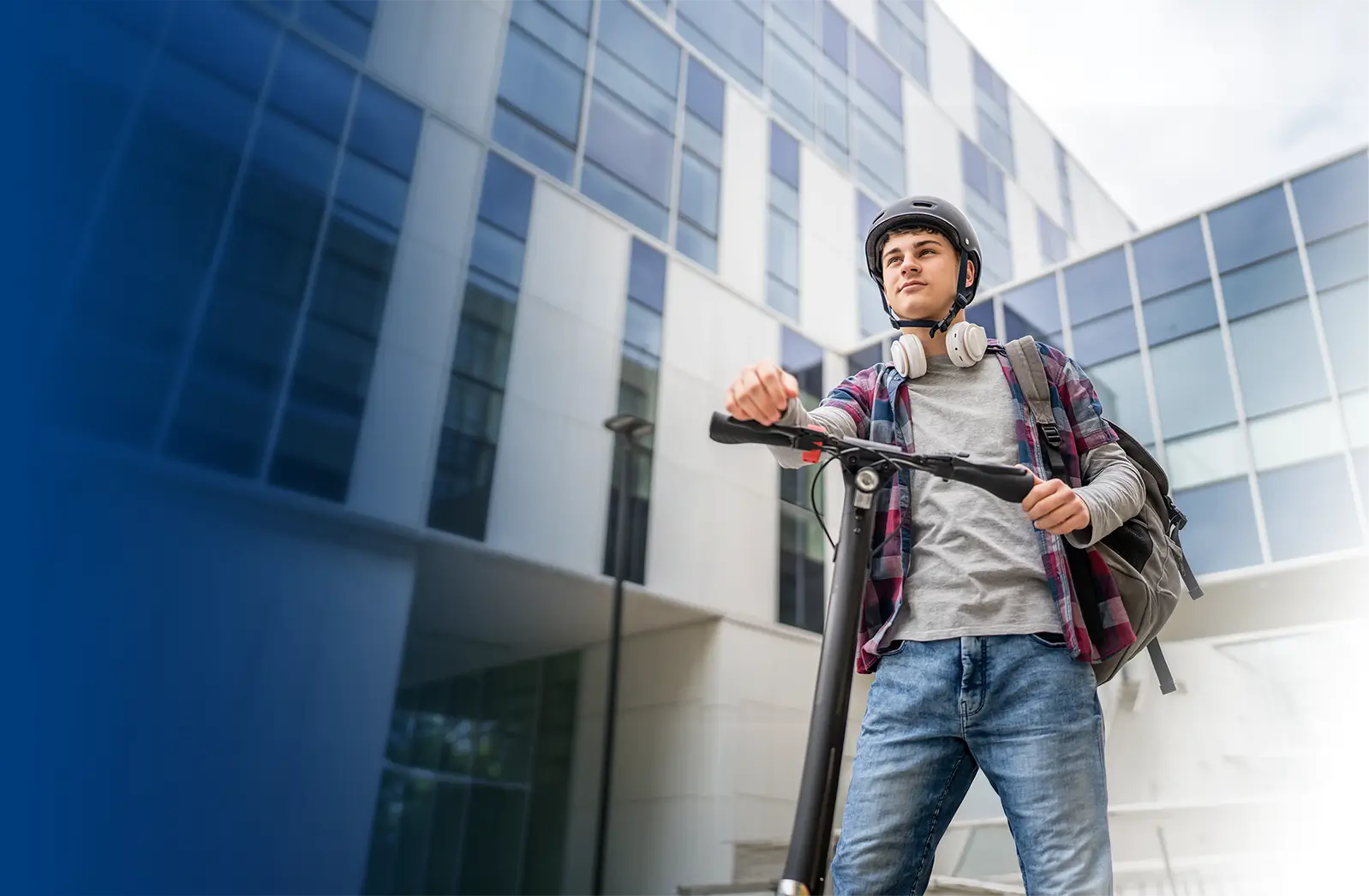
Safer, more respectful streets everywhere
To keep students, families, and neighbors safe on all streets, Sacramento County Office of Education (SCOE) launched Get Ride-Ready. Learn California's rules for e-bikes and e-scooters, e-bike classifications, and required rider equipment.
Guidelines & regulations
California law defines three classes of electric bicycles so riders know exactly what they are operating and where it belongs.
Class 1
20 mphPedal-assist only. The motor helps only while you pedal and stops assisting at 20 mph.
Class 2
20 mphThrottle-assisted. The motor can move the bike without pedaling, up to 20 mph.
Class 3
28 mphSpeed pedal-assist up to 28 mph. Requires a speedometer. Riders must be 16 or older.
Riders under 16 may not operate a Class 3 e-bike on any public street or bike path. Class 3 e-bikes may not carry passengers.
Like e-bike riders, e-scooter riders must follow the rules of the road. These do's and don'ts will help you understand the requirements and ride safely.
Age & license
Do: Be at least 16 and have a valid California learner's permit or driver's license.
Don't: Ride an e-scooter if you're under 16 or don't have a valid permit or license.
Speed limit
Do: Keep your e-scooter speed at 15 mph or below.
Don't: Ride your e-scooter faster than 15 mph.
Designated lanes
Do: Use bike lanes and permitted bike trails.
Don't: Ride your e-scooter on the sidewalk.
Rider capacity
Do: Ride solo on your e-scooter.
Don't: Double up. One rider only.
Knowing where you are allowed to ride protects you from citations and keeps people on foot safe.
- Class 1 and 2 e-bikes are generally allowed on bike paths, multi-use trails and bike lanes alongside regular roads.
- Class 3 e-bikes are allowed on streets and separated bike paths. Check city and park rules before using neighborhood multi-use paths.
- E-scooters are allowed on streets and bike routes.
- Sidewalk riding for e-bikes and e-scooters is not allowed in most places unless local code allows it in specific zones. Always yield to people walking.
Safety gear is your first line of defense in a collision or fall.
Under California law, every operator and passenger under 18 must wear a properly fitted and fastened helmet that meets Consumer Product Safety Commission (CPSC) standards whenever riding an e-bike and e-scooter. Helmets are strongly recommended for riders of every age.
Wear bright or high-visibility clothing on early-morning rides to school, and make sure the bike has a working white front light and a red rear reflector or light.
- Look for added protection. The National Bicycle Dealers Association recommends helmets with NTA 8776 certification for e-bike and e-scooter riders. These helmets provide additional coverage at the sides and back of the head. Look for a helmet that meets both CPSC and NTA 8776 standards, and always wear it properly fitted and buckled.
Lithium-ion batteries power e-bikes and e-scooters efficiently, but careless charging and storage can lead to fires.
- Only use the charger that came with your battery, or one the manufacturer approves.
- Never charge unattended or overnight, and never in a bedroom, hallway or school locker.
- Store batteries at room temperature, away from direct sun, heat sources and anything flammable.
- Stop using a battery that is swollen, damaged, leaking or unusually hot. Do not put it in household trash. Parents can take them to the local battery recycler or hazardous waste collection.